Best Entry-Level Hermès Bags Under $3,000: 2026 Guide
Which Hermès bags in the under-$3,000 tier deliver the strongest spend ratio contribution, best near-retail resale positioning, and clearest path toward a first quota bag allocation in 2026.
Every Birkin and Kelly allocation begins with a purchase history — and in the current boutique relationship framework, the sub-$3,000 tier of Hermès products is where most new client relationships start. The Evelyne, the Picotin, the Garden Party, the Herbag, and a range of small leather goods all occupy this entry tier, and every purchase from it serves a dual function: it delivers a genuine Hermès product for personal use, and it adds to the spend history that SA teams assess when considering quota bag allocations. The question is not whether to purchase in this tier — for most buyers building toward a first Birkin or Kelly, it is essential — but which specific products best serve both functions simultaneously.
The investment lens for this tier differs from the quota bag investment framework. Below-$3,000 Hermès bags do not generally trade above retail on secondary market platforms — they are freely purchased non-quota styles that lack the scarcity premium that drives Birkin and Kelly above-retail positioning. The correct investment metric here is not price-to-resale ratio but spend ratio efficiency: which purchases contribute most to quota bag access while minimising capital loss at eventual resale? The answer to that question is what this guide delivers.
The aesthetic and lifestyle dimension of each bag in this tier — which formats work for which daily use contexts, how each style reads in different settings — is covered by the design team at Hermès Guidance Lounge's entry-level style guide. This article focuses on the market and investment dimension: resale positioning, spend ratio contribution, and SA relationship signalling.
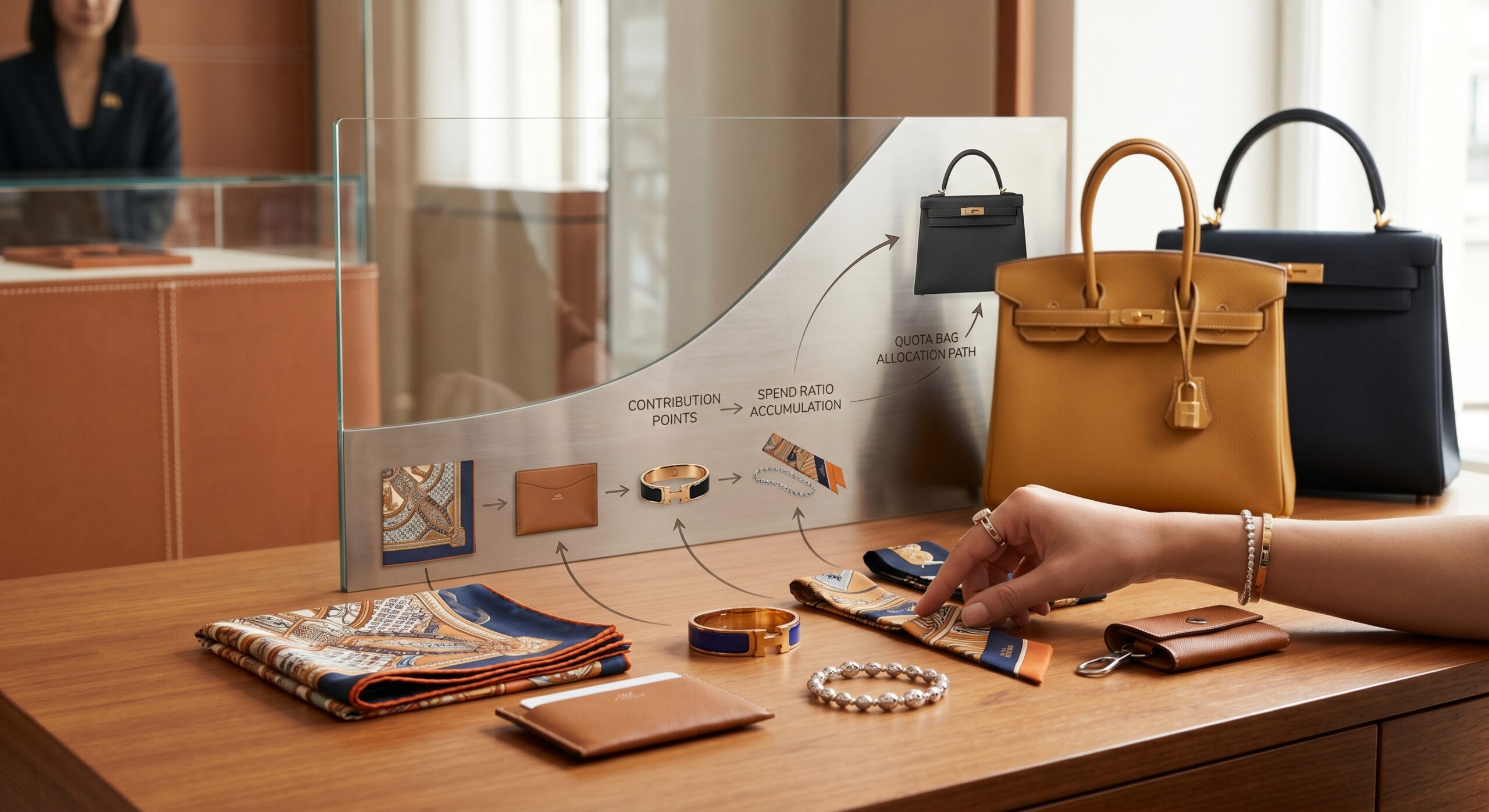
The Strategic Purpose of Entry-Level Hermès Purchases
The sub-$3,000 Hermès purchase is one of four levers available to a new client building toward a quota bag allocation — alongside SA relationship quality, boutique visit consistency, and the expressed preference conversation. Its specific function is spend history accumulation: every authenticated Hermès purchase at any price point is recorded in the client's global profile and contributes to the SA's assessment of the client's engagement with the brand.
The full spend ratio framework is covered in the Hermès Investment Guide, but the entry-level purchase decision requires understanding two nuances that the aggregate spend ratio framework does not capture. First, category signal matters: a client who accumulates spend through small leather goods and silk scarves signals different collector intent than one who accumulates equivalent spend through accessories, fragrance, or homewares. SA teams — consciously or not — weight purchases that reflect genuine engagement with the brand's core leather and silk heritage more heavily than peripheral category purchases. Second, purchase frequency matters: a series of thoughtful purchases across a 12-month boutique relationship builds stronger relationship capital than equivalent spend concentrated in two or three transactions.
An SA who sees a client purchase an Evelyne PM in Epsom, a silk carré, and a bearn compact wallet over three visits is observing a client who is building a coherent Hermès wardrobe across the brand's key categories. That pattern signals genuine collector intent. An SA who sees a client spend an equivalent amount on three fragrance purchases observes something different — the fragrance purchase is convenient and available everywhere; the leather goods and silk purchase requires boutique engagement and signals deliberate brand relationship investment.
This is not about gaming the system — it is about making purchases that genuinely reflect your interest in the brand's core products, which most buyers building toward a Birkin genuinely do feel. The market intelligence dimension is simply ensuring that your purchase pattern communicates that intent clearly through the SA's natural assessment lens.
The resale dimension of this tier requires honest framing: these purchases do not produce above-retail returns. The Evelyne, Picotin, and similar non-quota styles recover approximately 85–95% of purchase price in excellent condition — a modest loss that should be understood as the cost of building the boutique relationship that eventually produces a quota bag allocation. The context of how this compares to the price increase history is covered in our Hermès price increase history analysis — annual retail increases of 7–12% mean that pieces purchased in this tier and held for 2–3 years before resale may recover close to or slightly above original purchase price even without premium positioning.
The Ranked Guide: Best Bags Under $3,000
The ranking below evaluates the main Hermès bag styles available under $3,000 at retail against three criteria: resale recovery rate (how much of purchase price is returned at eventual resale), spend ratio signal quality (how strongly the purchase registers as collector engagement in the SA's assessment), and lifestyle utility (how genuinely useful the piece is during the period it is held before quota bag access is achieved).
"In the under-$3,000 tier, the purchase decision is not primarily about investment return — it is about selecting pieces that serve three simultaneous functions: personal utility, spend ratio accumulation, and SA relationship signal. The Evelyne is the only piece that optimises all three simultaneously."
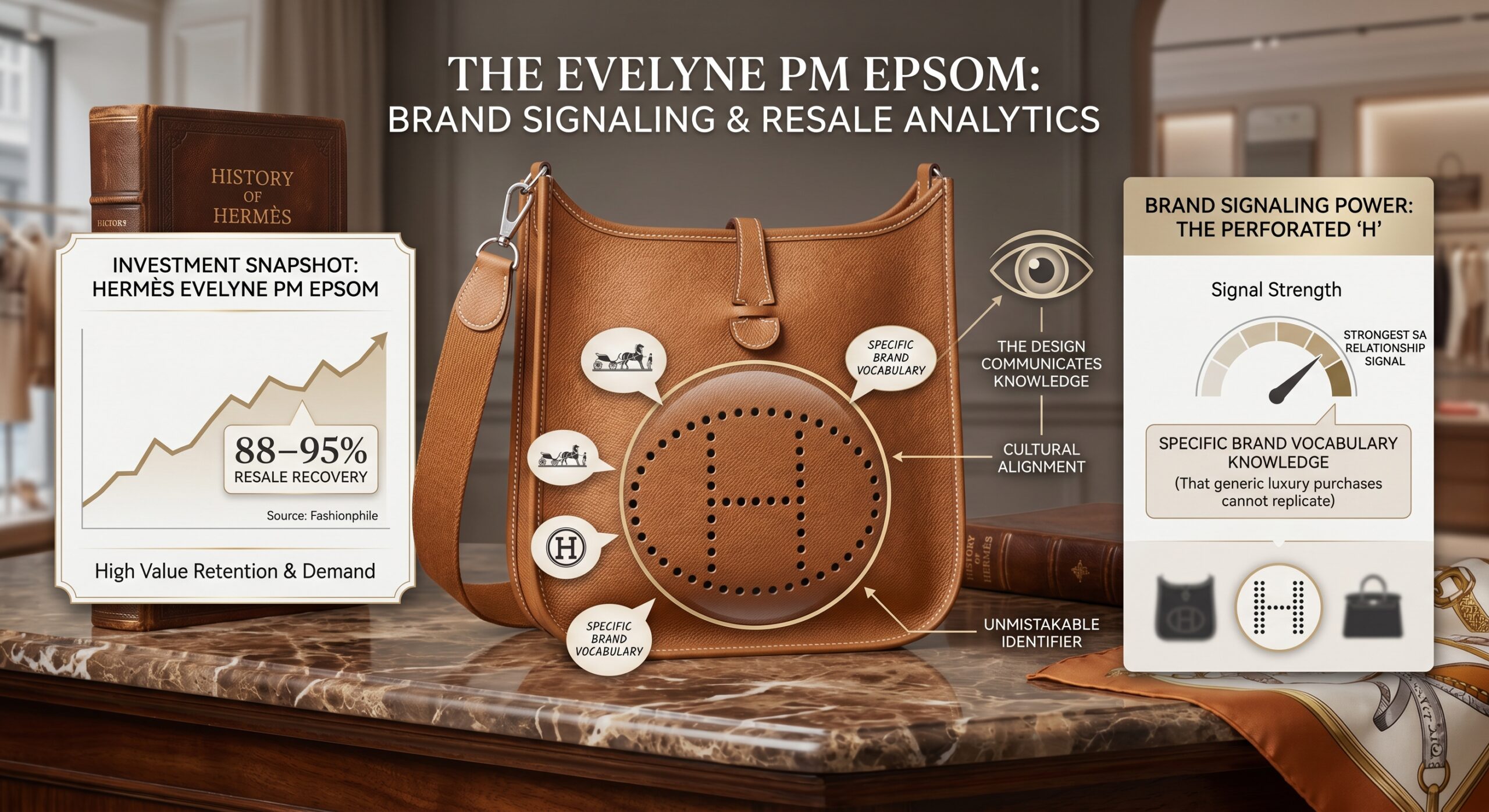
Resale Reality: What These Bags Actually Return
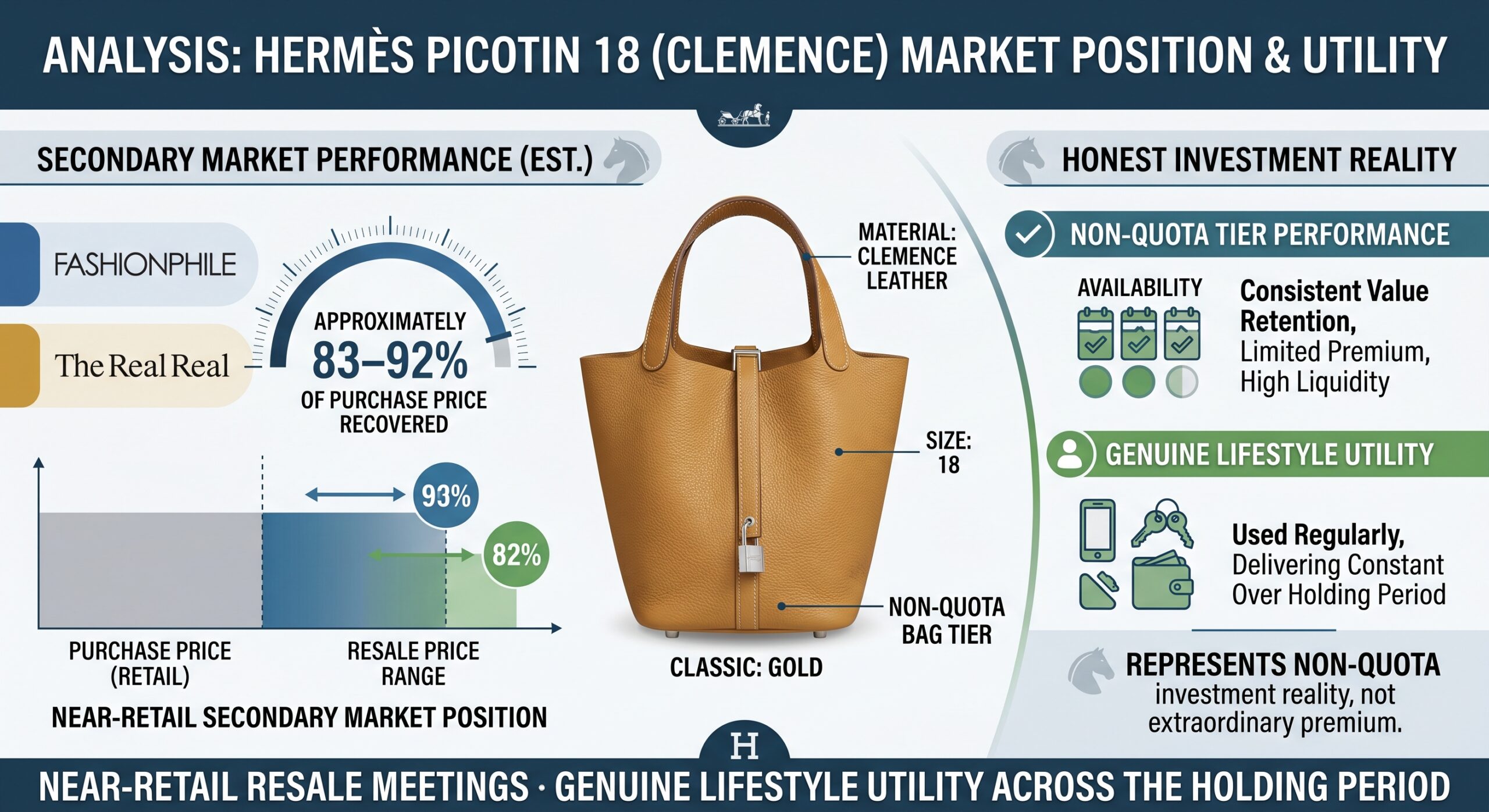
The resale reality for the under-$3,000 Hermès tier is clearly different from the quota bag tier: these are not investment vehicles that return above retail. They are lifestyle purchases that hold value better than most luxury alternatives in their price range — but the correct expectation is near-retail recovery, not premium positioning. Setting this expectation correctly before purchase prevents the disappointment that some buyers experience when they discover that a Picotin or Garden Party does not behave like a Birkin on the secondary market.
The platforms where these pieces perform best differ from the quota bag platform hierarchy. On Fashionphile, the entry-level Hermès range sells at consistent near-retail pricing with fast sell-through — the platform's broad US buyer pool includes many buyers for whom an Evelyne or Picotin is an aspirational purchase rather than a collector-tier acquisition. On The Real Real, similar dynamics apply with slightly more variable pricing. Vestiaire Collective and 1stDibs are less appropriate for standard entry-level pieces — their collector buyer pools are looking for quota bags and rare configurations, not standard Evelyn TPMs in common colours. The size demand dynamics that favour smaller Birkins and Kellys apply here too: the Evelyne TPM consistently outperforms the PM at resale on a percentage basis, and the Picotin 18 significantly outperforms the 22.
- Purchase entry-level pieces in neutral, wearable colours (Noir, Etain, Nata, Craie) — these recover better at resale than seasonal or statement colours, which narrow the buyer pool at eventual exit.
- Maintain excellent condition through the holding period — the resale recovery differential between excellent and good condition at this tier is approximately 10–15%, which represents a meaningful portion of the total purchase price at these price points.
- Keep original dustbags and any accompanying packaging — provenance matters proportionally less at this tier than for quota bags, but complete sets recover better than incomplete ones on Fashionphile and The Real Real.
- Do not rush to resell — Hermès annual price increases of 7–12% mean that a piece held for 24–36 months before resale benefits from the increased retail price floor that makes near-retail recovery a moving target. An Evelyne purchased at $1,800 in 2024 may resell at near-retail of $2,000 in 2026 following two price increase cycles.
- Consider Fashionphile consignment for fastest exit — the platform's high volume of entry-level Hermès transactions means faster sell-through than consigning through Vestiaire or listing independently on 1stDibs for this price tier.
The liquidity comparison between the Evelyne and Picotin at this tier — including which specific configurations sell fastest and at what recovery rates on each platform — is covered in our detailed analysis of Hermès Evelyne vs Picotin market liquidity. For the broader context of how these size demand dynamics interact with resale positioning across the full Hermès range, our guide on which Hermès bag sizes have the highest resale demand in 2026 provides the framework that applies from the entry tier through to the quota bag level.
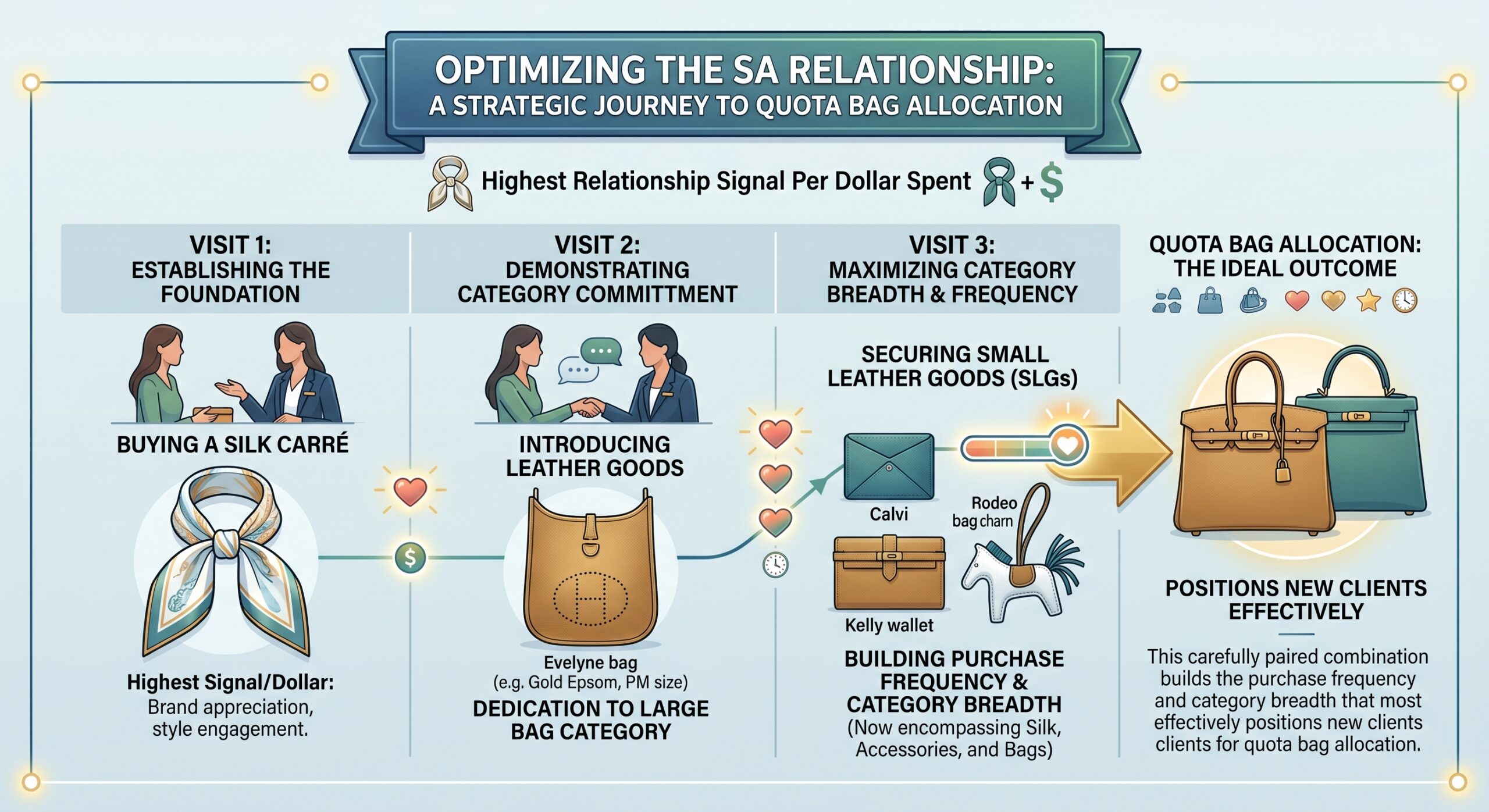
Building Your Entry-Level Purchase Strategy
The entry-level purchase strategy is most effective when planned across 12–18 months rather than executed as a single large purchase. A client who makes three to four thoughtful purchases from the entry tier across multiple boutique visits builds relationship depth and purchase frequency signals that a single equivalent spend does not replicate. The SA observes not just total spend but the pattern of engagement — consistent visits, considered purchases, and growing familiarity with the brand across its core categories.
The recommended entry-level portfolio for a buyer in the first 12–18 months of building toward a first quota bag allocation is a sequenced approach: begin with a silk carré (highest SA signal per dollar spent), follow with an Evelyne TPM or PM (strongest bag purchase in the tier), then add small leather goods such as a card holder or compact wallet (core category with high collector signal), and optionally add a second silk piece or a Picotin if budget permits. This sequence builds purchase frequency, category breadth, and spend history simultaneously.
- Begin with a silk carré — the purchase signal relative to price point is highest in the Hermès range, and it demonstrates knowledge of the brand's foundational heritage category from your first boutique visit.
- Follow with an Evelyne TPM within the first 2–3 boutique visits — this establishes your leather goods engagement and gives you a daily use piece that naturally creates conversation opportunities with your SA during subsequent visits.
- Add at least one small leather goods piece (card holder, compact wallet, or agenda cover) — this registers across the brand's most heritage-weighted category and typically costs $400–$900, making it one of the most spend-efficient SA signal purchases available.
- Never buy entry-level pieces solely to spend — purchase things you will genuinely use and genuinely appreciate. SAs are excellent at distinguishing clients who are building a real relationship from those who are transparently gaming a spend threshold. The former receives offers; the latter eventually does not.
- Space your purchases to maintain visit cadence — aim for one to two boutique interactions per month, and make a purchase during approximately every second or third visit. This frequency-without-pressure pattern builds the impression of a genuine, consistent relationship rather than a transactional one.
The full spend ratio strategy — including specific category weighting, timing of the quota bag preference conversation, and how to transition from entry-level purchasing to quota bag allocation timing — is covered in our comprehensive guide to Hermès quota bag spending ratio strategy for 2026. And for buyers considering whether to supplement their entry-level boutique relationship with a Paris Leather Appointment attempt, the Paris lottery tips guide covers how global purchase history built in the entry tier can support a Paris appointment outcome.
| Bag / Product | Price Range | Resale Recovery | SA Signal | Best Platform | Strategic Role |
|---|---|---|---|---|---|
| Evelyne TPM / PM (Epsom) | $1,500–$2,500 | 88–95% | High | Fashionphile | Primary bag purchase — best all-round |
| Silk Carré 90cm | $500–$800 | 70–85% | Very High (per $) | Vestiaire · TRR | Heritage signal — buy with every visit |
| Picotin 18 (Clemence/Togo) | $1,400–$2,200 | 83–92% | Good | TRR · Fashionphile | Strong second bag purchase |
| Small Leather Goods | $400–$900 | 65–80% | Very High | Fashionphile | Core category — highest signal/$ ratio |
| Garden Party 30 (Toile) | $1,800–$2,800 | 78–88% | Moderate | Fashionphile · TRR | Good utility — moderate signal |
| Herbag Zip 31 | $2,200–$2,900 | 80–90% | Moderate | Fashionphile | Lifestyle choice — not primary strategy |
| Picotin 22 (any leather) | $1,600–$2,500 | 75–85% | Moderate | TRR · Fashionphile | Choose 18 over 22 for better resale |
| Evelyne III GM (large) | $2,200–$3,000 | 78–88% | Good | Fashionphile | Choose TPM/PM — smaller sizes resell better |
Resale recovery figures are approximate and reflect observed secondary market patterns for pieces in excellent condition. Actual outcomes depend on specific colour, condition, platform, and timing. All prices reflect approximate 2026 US retail ranges before tax.
Buy the Evelyne First — Then Build the Pattern That Produces a Birkin
The entry-level Hermès purchase decision is not primarily a resale investment decision — it is a strategic relationship-building decision that happens to involve resale-aware choices. The correct first bag purchase in the under-$3,000 tier is the Evelyne TPM or PM in a neutral Epsom colour: it delivers the best combination of resale recovery, SA relationship signal, and genuine lifestyle utility of any single piece in this price range.
Pair the Evelyne with a silk carré and a small leather goods piece across your first three or four boutique visits, and you have established a purchase pattern that signals genuine brand engagement across the three heritage categories that SA teams weight most heavily. This is not the full spend ratio — it is the beginning of it — but it is the beginning executed correctly, with the category breadth and visit frequency that accelerates the relationship toward a first quota bag offer.
The resale reality of the entry tier must be understood honestly: these are near-retail recovery pieces, not investment vehicles. The 5–15% capital loss on an Evelyne or Picotin is the cost of building the boutique relationship that eventually produces a Birkin — a relationship that, when it produces a first quota bag allocation, yields 20–35% above retail on the secondary market. The entry-level investment logic is correct when the full acquisition strategy is understood as a sequence rather than a single transaction.
Bottom Line: Buy the Evelyne TPM in neutral Epsom, add a silk carré, follow with a small leather goods piece across three thoughtful boutique visits — and understand that this pattern is the foundation of a quota bag relationship, not a standalone investment.
Popular Searches
Explore our most searched entry-level Hermès and spend ratio questions
Frequently Asked Questions
For buyers building toward a quota bag allocation, the Evelyne TPM or PM in a neutral Epsom colour is the strongest strategic purchase under $3,000 in 2026. It is priced between $1,500 and $2,500 depending on size and colour, contributes meaningfully to the spend ratio without requiring SA relationship history, and is genuinely wearable as a lifestyle piece. Its resale position is near-retail rather than above-retail — approximately 88–95% of purchase price — which makes it the most capital-efficient relationship-building purchase in the under-$3,000 tier. See our Hermès spend ratio strategy guide for the full context.
Near-retail resale — approximately 80–95% of purchase price — is the realistic expectation for most Hermès bags under $3,000. These are non-quota styles that do not carry the scarcity premium that drives Birkin and Kelly above-retail positioning. The Evelyne achieves the strongest near-retail recovery of the main entry-level styles; the Picotin 18 and Garden Party 30 follow. The Constance 18cm GHW is the only Hermès piece that consistently delivers above-retail secondary market performance, but it sits at the upper end of this price range and requires meaningful SA relationship investment to access in most markets.
Yes — meaningfully. Every non-quota purchase contributes to the spend history that SA teams assess when making quota bag allocation decisions. The spend ratio mechanism is real, and Evelyne, Picotin, and small leather goods purchases all contribute to it. However, category selection matters: purchases with higher perceived brand engagement (small leather goods, silk scarves) signal stronger collector intent than accessories or fragrance. Building spend history is necessary but not sufficient — the boutique relationship and SA interaction quality are equally important. See our Hermès wish list strategy guide for the full SA relationship framework.
Both are strong first purchases, but the Evelyne has a marginal edge as the single strongest entry-level pick. The Evelyne TPM or PM is more compact and versatile across contexts; its Epsom leather is highly durable; and its perforated H detail communicates specific brand vocabulary knowledge to your SA. The Picotin 18 is slightly lower in resale recovery and SA signal but meaningfully more relaxed as a daily bag. If you need a functional open tote for daily carry, the Picotin 18 is fully justified. For maximum spend ratio strategy alignment, the Evelyne edges ahead. See our full Evelyne vs Picotin comparison for the detailed liquidity data.